> ## Documentation Index
> Fetch the complete documentation index at: https://docs.pensiv.so/llms.txt
> Use this file to discover all available pages before exploring further.
# Window behavior — obfuscation, translucency, tray
> Obfuscate screen covers the window when you step away, Translucent window gives it a glass texture, and one setting keeps the app in the tray.
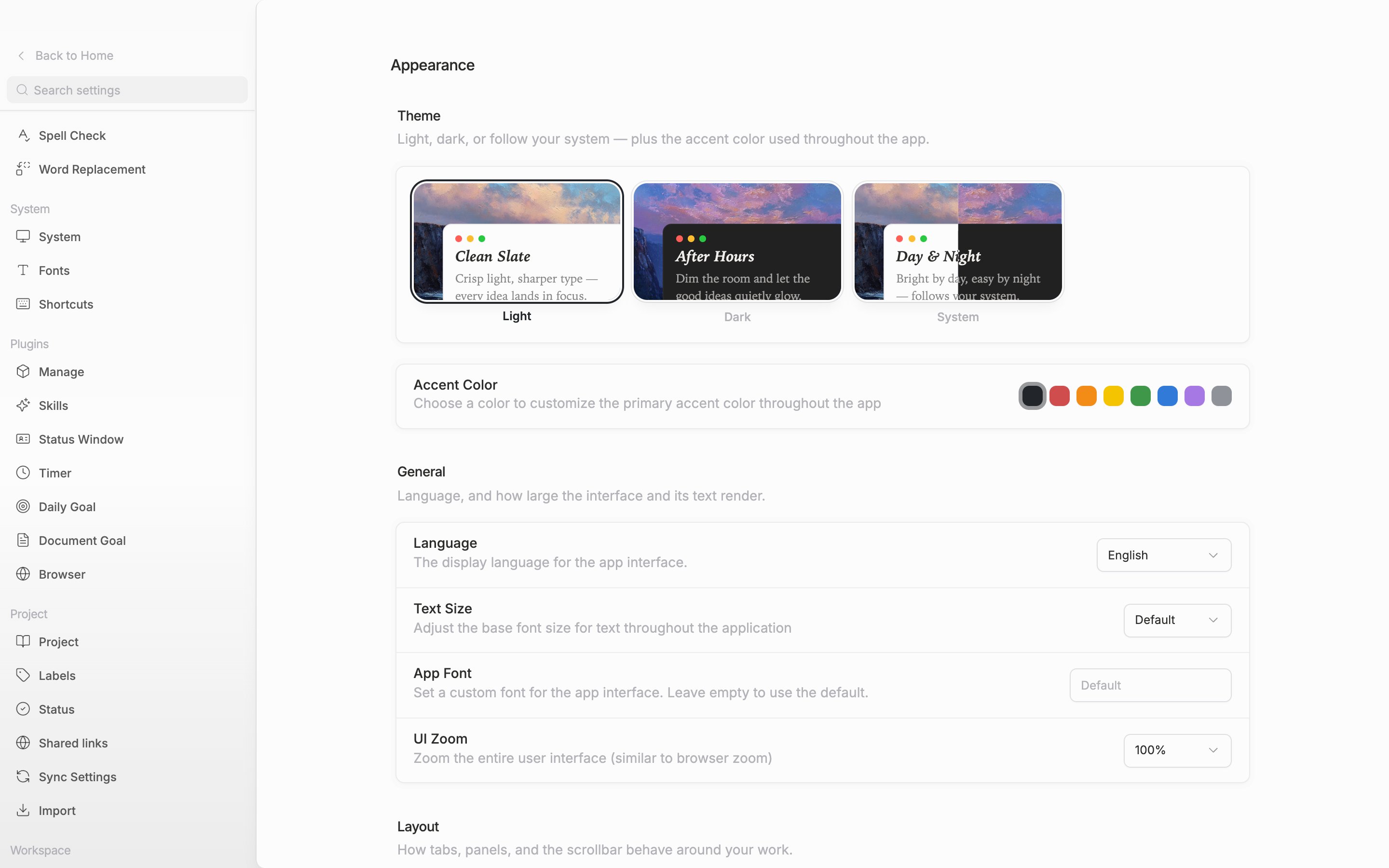
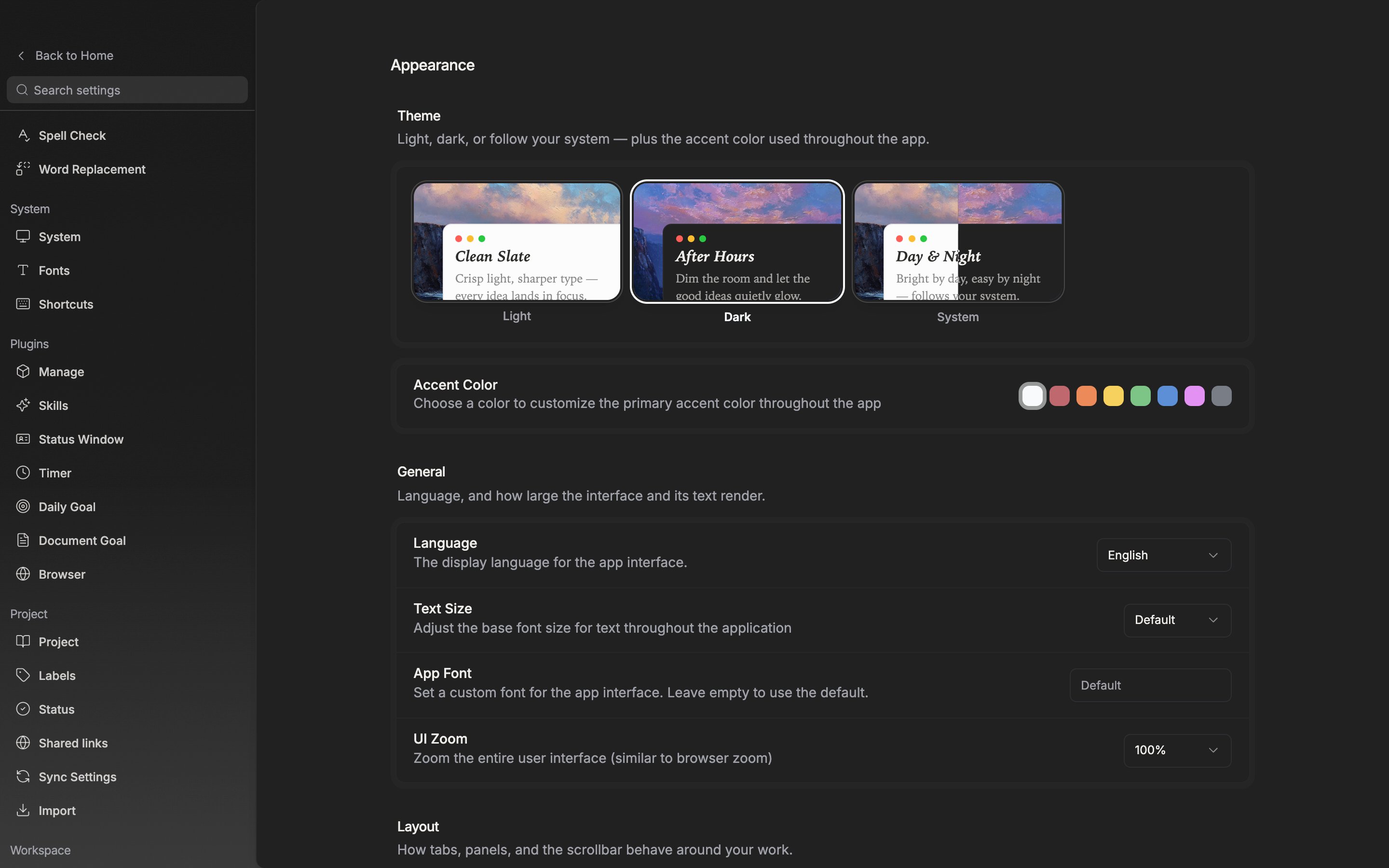
How the window looks and how it closes is split between two places in settings. Obfuscation and closing are in **System**, the glass texture in **Appearance**.
## Blurring when you step away
Turn on **Obfuscate screen** and the whole screen blurs the moment the window loses focus. In the middle, a padlock appears together with `You can turn off the obfuscation option in Settings > System > Obfuscate screen.` Click the window again and it lifts right away. It covers rather than locks, so it only keeps the manuscript from being read over your shoulder while you turn your head for a moment at a cafe.
It works on screens with a project open. It is off to begin with, and the value you turn on stays on this device only.
## Translucent window
Turn on **Translucent window** in the **Window** section of Appearance and a glass effect that lets the desktop show through takes hold. It works on macOS and Windows 11 and is on from the start. While it is on, an **Opacity** slider comes along to set how much of the desktop shows through. The glass lands on the sidebar and the title bar, and the body where you read the manuscript stays opaque.
**Grain** and **Accent tint** below can be adjusted even with translucency off. They lay a film-grain texture over the window background and blend in a faint wash of the accent color. All four values take effect on screen the moment you touch them, and they are stored in your account, so the app opens looking the same on another device.
Turning on translucency brings the Opacity slider along with it.
## Staying in the tray after you close
**Close to tray** is on from the start. Close the window and the app stays in the tray, or in the menu bar on a Mac. Click that icon and two rows appear, **Show** and **Quit**. Turn this setting off and the app quits completely the moment you close the window.
**Keep window loaded on close** is off. Left this way, closing actually destroys the window and pressing **Show** brings up a new one. Turn it on and the window is only hidden, so there is nothing to wait for when you reopen it, at the cost of holding on to that much memory.
The rest of the System tab is covered in [System and cache](/en/settings/system).