

Switching between light and dark
The Theme section at the top of Appearance holds three preview images. They are Light, Dark, and System, and System follows your operating system setting as it is. The app changes the moment you click, and windows you opened separately switch along with it. The value you pick is saved to your account, so the app opens in the same mode on other devices. The command palette also has three commands — Light Mode, Dark Mode, and System Theme — which help when you want to switch without taking your hands off the manuscript. Accent Color right below sets the color used throughout the app. To swap the colors out entirely, see Installing and creating themes.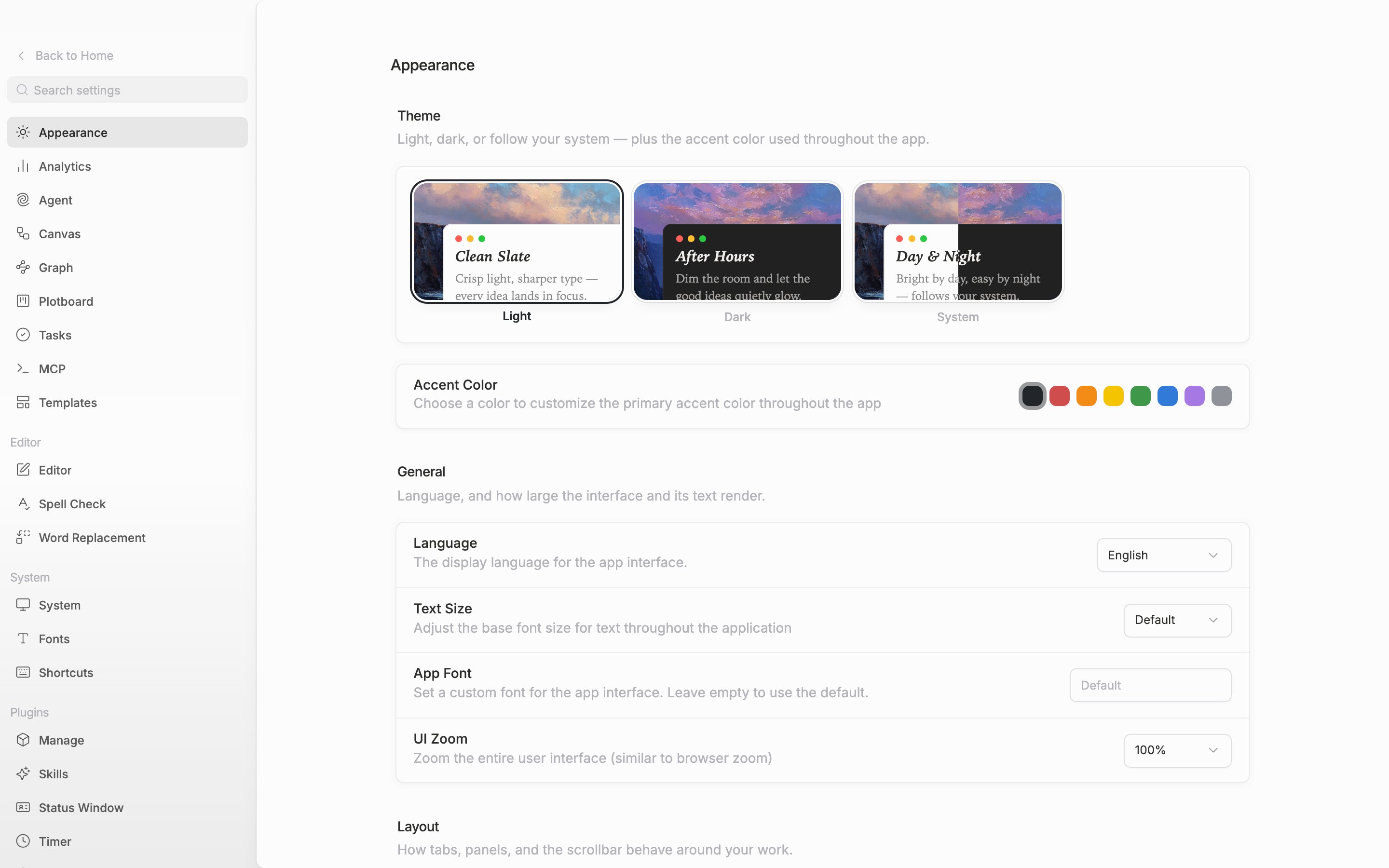
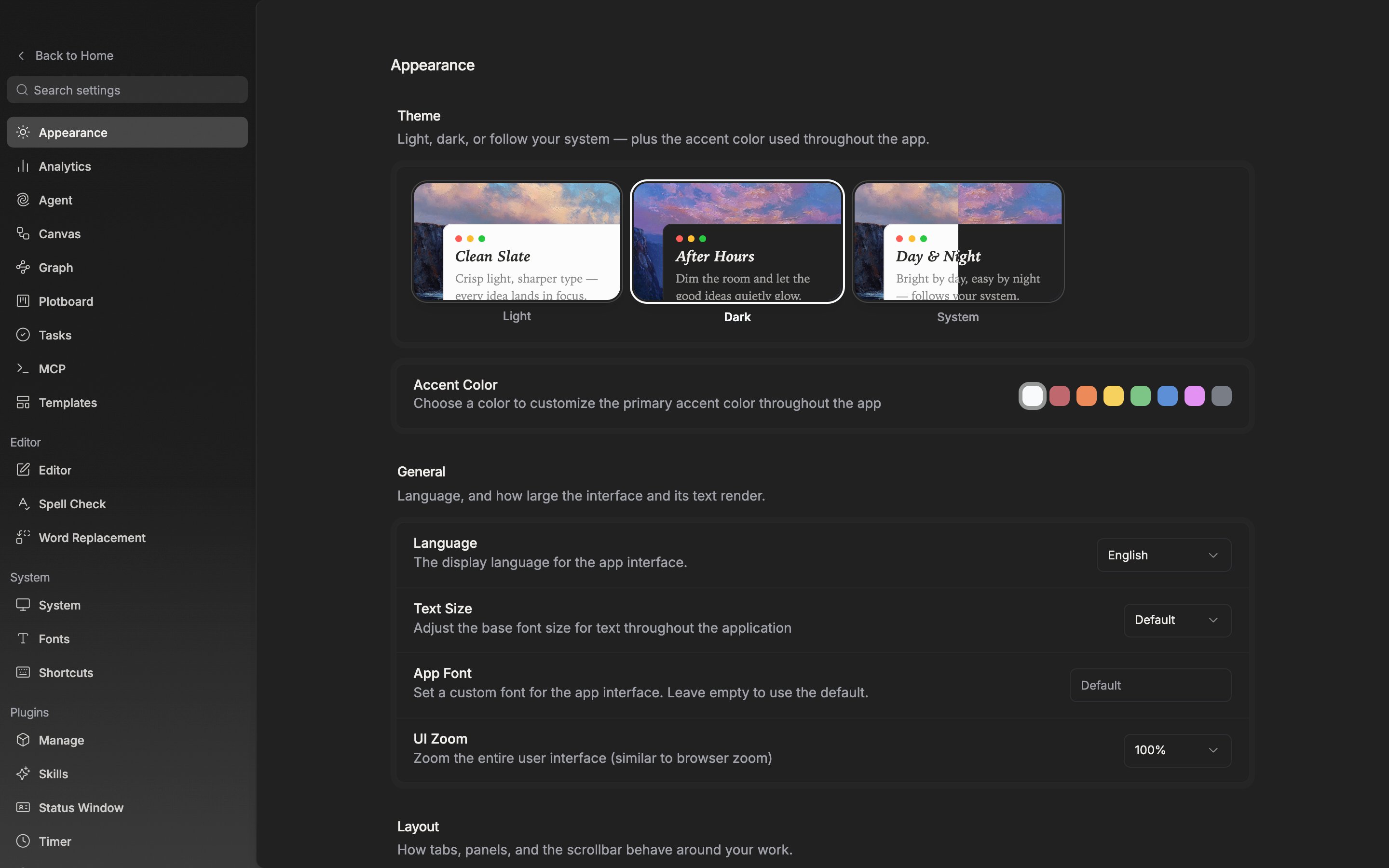
Pick one of the three tiles: Light, Dark, or System.
Importing fonts
Go to Fonts and click Import Font at the top right. It accepts.ttf, .otf, .woff, and .woff2, and you may select several at once. A file larger than 10MB does not come in. If you have nothing yet, only No imported fonts yet and Import Your First Font are shown.
Files that share a family name are grouped into a single row in the list, however many you add. Add the bold and italic files together and bold and italic in your manuscript come out in shapes that belong to that font. When two files overlap in weight and style, the later one overwrites the earlier one.
Imported fonts are appended at the bottom of the font lists in the document toolbar and in the Editor settings, below a divider.